

When Syracuse University hired Fran Brown as head coach, it was investing in a philosophy rather than just hiring a football strategist. His projected $4 million salary represents more than just contract figures; it is a testament to his faith in transformation, leadership, and connection.
Brown’s journey from defensive backs coach at Georgia, where he made about $750,000 a season, to the top football position at Syracuse was nothing short of extraordinary. His rapid ascent and the increasing readiness of private institutions to combine financial might with audacious ambition were both highlighted. Considering that his predecessor, Dino Babers, made approximately $4.06 million a year, Brown’s salary is commensurate with Syracuse’s dedication to preserving equality among the top players in the Atlantic Coast Conference.
Syracuse is exempt from disclosing precise numbers because it is a private university, which gives the transaction an alluring sense of mystery. According to several reports from USA Today, On3, and Sports Illustrated, Brown’s base pay is estimated to be around $4 million, with performance bonuses that could greatly boost his overall compensation. The structure that rewards excellence beyond wins and losses is likely to include incentives for national rankings, bowl appearances, and team GPA accomplishments.
Table: Fran Brown – Personal and Professional Information
| Full Name | Fran Brown |
|---|---|
| Born | February 3, 1982 (approx.), Camden, New Jersey, USA |
| Age | 43 (2025) |
| Current Position | Head Coach, Syracuse University Football |
| Annual Salary (2025) | Estimated $4 million per season (approx.) |
| Previous Position | Defensive Backs Coach, University of Georgia (2022-2023) |
| Previous Salary | $750,000 per season (Georgia) |
| Coaching Career Highlights | Rutgers, Temple, Baylor, Georgia, Syracuse |
| Known For | Elite Recruiting Skill, Player Mentorship, Leadership Philosophy |
| Education | Western Carolina University |
| Reference | USA Today – College Coaches Pay Database |
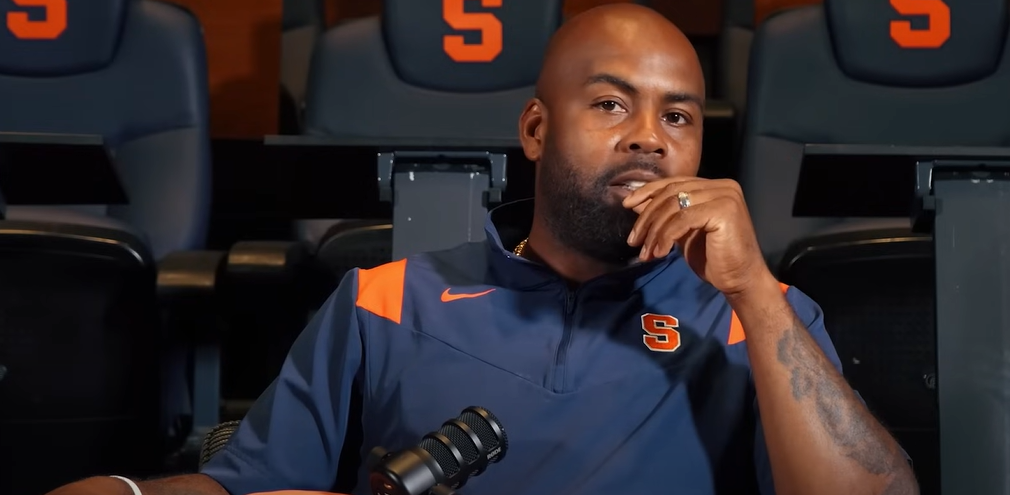
Brown’s ascent to prominence has been especially motivating. Despite the challenges and adversity he experienced growing up in Camden, New Jersey, his outlook remained remarkably optimistic. His story resonates remarkably with many of the young athletes he now coaches, demonstrating that perseverance and purpose can overcome adversity. In addition to his coaching techniques, his background influenced his communication style, which combines empathy and toughness.
Brown became known at Georgia for his unique approach to player relations. He was characterized by recruits as “real,” speaking from experience rather than performance. His strategy was incredibly successful in helping the Bulldogs land highly regarded defensive players during their national championship runs. That recruiting success’s emotional intelligence was exactly what Syracuse was looking for: a leader who prioritizes people over strategy and can establish trust.
By late 2023, when Syracuse called, Brown’s reputation as a relationship-oriented coach had become his trademark. In addition to skill development, his move from $750,000 assistant to $4 million head coach reflects a change in the way that contemporary college athletics views worth. Brown’s relatability became valuable in a time when no accolades are as valuable as authenticity.
The timing couldn’t be more perfect. Athletic director John Wildhack of Syracuse had become more outspoken about reviving the football culture and stressing integrity-based leadership. Wildhack allegedly remarked, “Fran’s energy is highly efficient and deeply personal,” outlining how Brown’s charm could help the university reestablish a connection with both alumni and prospective students. “He reminds us of the power of belief.”
This belief has already produced measurable outcomes. Brown changed the Syracuse recruiting scene within months of his hiring. After initially ignoring the program, four-star prospects started to change their minds, citing his warmth and transparency as key considerations. His leadership style, which players have called “authentically motivating,” has significantly raised morale and indicated that the program has been revitalized under a coach who truly cares about his players.
In terms of finances, his contract lies at the nexus of market reality and vision. Elite football coaches like Kirby Smart and Nick Saban now earn over $10 million a year, reflecting the sharp increase in college football salaries. A balanced commitment that maintains Syracuse’s competitiveness without defying institutional philosophy, Brown’s $4 million deal feels strategic rather than extravagant in light of this.
The action also highlights a broader economic trend in college sports. Schools like Syracuse are realizing that leadership quality can be just as valuable as historical pedigree even as TV contracts and conference realignments change financial ecosystems. Future relevance is more important than football success when you invest in a young, culturally sensitive coach.
This makes Brown’s personal style stand out. He frequently combines inspirational tales with practical teachings, and his communication is incredibly clear. Reminding players that “pressure is a privilege,” he often makes reference to his childhood. A generation of athletes is increasingly looking for mentors rather than just tacticians, and that message strikes a deep chord with them.
By incorporating community involvement into his approach, Brown has evolved from a coach to a unifying force. Sports can unite people from different social and economic backgrounds, as demonstrated by his outreach in Camden and Syracuse. The notion that leadership transcends the field is further supported by his pledge to donate a portion of his future earnings to educational initiatives for disadvantaged young people.
His leadership style is similar to Deion Sanders’ cultural movement at Colorado, according to observers, but it is more subdued and grounded. Both coaches have changed their programs by emphasizing interpersonal relationships over ancestry. However, there is a noticeable sense of humility in Brown’s story; his charm is subtle, and his objectives are obvious.
In a larger context, his $4 million salary has come to represent the new economics of modern coaching, where authenticity can fetch high prices. This new paradigm is embodied by the younger generation of coaches, such as Dan Lanning at Oregon and Marcus Freeman at Notre Dame: they are media-savvy, emotionally intelligent, and incredibly adaptive. Together, they are changing what it means to be a leader in collegiate sports.
Fran Brown’s hiring marks a measured but hopeful step forward for Syracuse. The program secured top-tier leadership without compromising sustainability through donor-backed funding and strategic partnerships. The hiring was reportedly supported by boosters who believed that Brown’s enthusiasm would increase ticket sales and recruitment. They were correct, according to preliminary data, as attendance and merchandise sales have already significantly increased since his arrival.
